
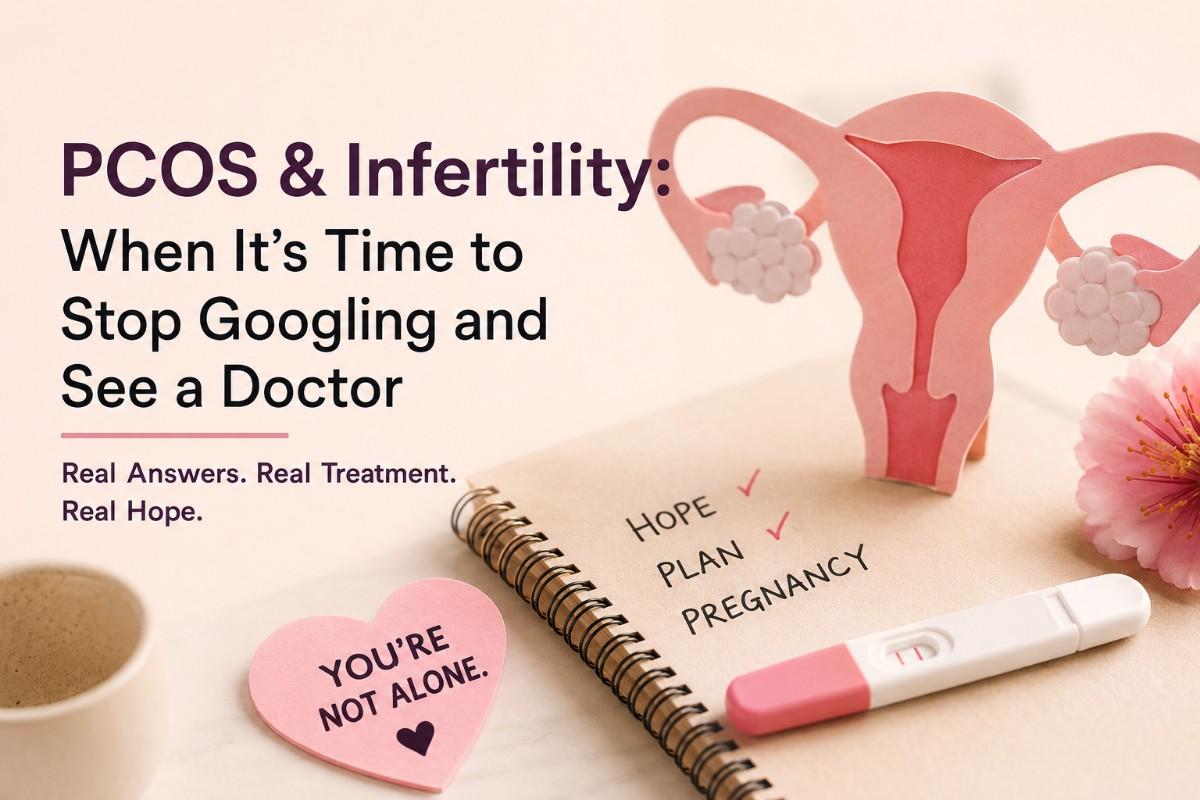
PCOS and Infertility: When It’s Time to Stop Googling and See a Doctor
If you’ve typed “PCOS pregnancy chances” into Google at 1 AM, this one’s for you. Straight answer: PCOS is one of the most common — and most treatable — causes of infertility, and seeing the Best Infertility Specialist in Noida early can fix what months of Reddit threads never will. Dr. Parul Agrawal Fertility has spent years helping women with PCOS get pregnant using proper hormone testing, ultrasound monitoring, and personalised treatment plans, not guesswork. Real patients, real results. So if you’re stuck in the scroll-and-worry loop, this is your sign to close the tab and book an appointment instead.
Okay, Let’s Talk About What Googling Is Actually Doing to You
Honestly, we get it. Googling feels productive. You read one article, then five more, then you’re comparing symptoms with strangers on forums at midnight. But here’s the thing — Google doesn’t know your hormone levels. It doesn’t know your AMH count. It doesn’t know if your ovaries are actually polycystic or if you just have irregular periods for some other reason.
Every body is different. Every PCOS case is different. So a blog (yes, even this one) can only take you so far.
Plus, the more you Google, the more anxious you get. Anxiety plays games with your cycle too. It’s a loop that doesn’t end unless someone breaks it — and that someone should be a doctor, not a search engine.
What Exactly Is PCOS, In Plain Words
PCOS stands for Polycystic Ovary Syndrome. Basically, your hormones get a bit confused. Your ovaries make slightly more male hormones (androgens) than usual, and this messes with ovulation.
Some months you ovulate. Some months you don’t. Some months your period shows up. Some months it just… doesn’t.
Here’s a stat that surprises people: PCOS affects roughly 1 in 5 women in India, according to multiple hospital-based studies. That’s not a rare condition. That’s your college roommate, your cousin, maybe even you.
And PCOS is one of the leading causes of anovulatory infertility — meaning infertility caused by not ovulating regularly. So no, you’re not broken. Your hormones just need a bit of professional help.
Signs It’s Time to Stop Googling and Book That Appointment
Check this out — if any of these sound familiar, stop scrolling and call a clinic today:
- Your periods are irregular or missing for months at a time
- You’ve been trying to conceive for over a year (six months if you’re above 35)
- You have excess facial or body hair, or sudden acne breakouts
- You’ve noticed sudden weight gain that won’t budge no matter what you try
- Home ovulation kits keep giving you confusing or inconsistent results
- Your mom, sister, or aunt has PCOS too (it does run in families)
If you’ve ticked even two of these, Googling won’t fix it. A proper diagnosis will. This is exactly where the Best IVF Treatment Doctor in Noida comes in — someone who can actually run the tests instead of guessing along with you.
Why Self-Diagnosis Usually Backfires
Here’s the tricky part about PCOS. It doesn’t look the same in every woman. Some have textbook symptoms. Some have almost none, and only find out after years of trying to conceive.
So when you self-diagnose off a blog post, you might treat the wrong thing entirely. Maybe your real issue is thyroid-related. Maybe it’s a luteal phase defect. Maybe it’s something on your partner’s side (yes, that’s a thing too — more on that in a bit).
Then there’s the medication problem. People start random supplements off Instagram reels. Some of these interfere with actual fertility treatment later. Not great.
The bottom line is, a real diagnosis needs blood work, ultrasounds, and someone trained to read between the numbers. That’s not something WebMD can do for you.
What Actually Happens When You See a Specialist
Alright, so what does the “doctor visit” actually look like? Nothing scary, promise.
First, there’s a detailed history — your cycle, your symptoms, your lifestyle, your family history. Dr. Parul Agrawal Fertility spends real time on this part, because rushing it means missing something important.
Then comes the testing — hormone panels (LH, FSH, AMH, testosterone, thyroid), a pelvic ultrasound to check your ovaries, and sometimes a glucose tolerance test since PCOS often comes with insulin resistance.
Also, your partner gets checked too. Infertility isn’t always a “her” problem — nearly 40% of infertility cases involve a male factor, according to WHO data. So if you’re searching for the Best Male Infertility Treatment in Noida, that conversation usually happens at the same clinic, same visit, no separate drama needed.
Once everything’s mapped out, you get an actual plan. Not a maybe. A plan.
Ready to Stop Guessing?
If you’ve read this far, you already know Googling isn’t cutting it anymore. Book a consultation and get real answers instead of more open tabs. It genuinely takes one visit to feel less lost.
Treatment Options That Actually Work for PCOS
So here’s what real treatment can look like, depending on your case:
Lifestyle-First Approach
For milder PCOS, sometimes a structured diet and exercise plan alone kickstarts ovulation again. Losing even 5-10% of body weight can restore regular cycles for a lot of women. Not a myth — it’s backed by data.
Ovulation Induction
Medications like Letrozole or Clomiphene help nudge your ovaries into releasing an egg on schedule. Simple, affordable, and often the first line of treatment.
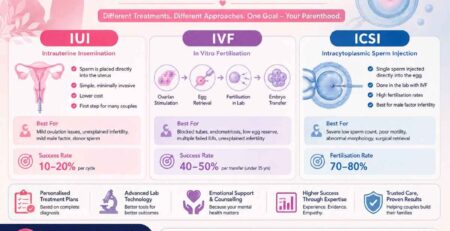
IUI (Intrauterine Insemination)
If ovulation induction alone isn’t enough, IUI adds a bit more precision — timing insemination right when you’re ovulating.
IVF
For more complex cases, or when other options haven’t worked, IVF becomes the go-to. And this is where finding the Best IVF Doctor in Noida actually matters — success rates vary a lot depending on lab quality, monitoring, and experience.
Dr. Parul Agrawal Fertility’s clinic uses individualised protocols instead of one-size-fits-all cycles, because PCOS patients often respond differently to stimulation medications than other patients do. That detail alone changes outcomes.
Male Infertility Deserves Equal Attention Too
Quick tangent, but an important one. So many couples focus entirely on the woman’s fertility and completely skip checking the man. That’s a mistake.
A basic semen analysis takes one visit and answers a lot of questions upfront. Sperm count, motility, morphology — all checked in one go.
Honestly, the Best Male Infertility Treatment in Noida isn’t complicated. It usually starts with lifestyle changes (less smoking, less alcohol, better sleep), and if needed, moves to medication or minor procedures. Sometimes it’s genuinely that simple.
Couples who get both partners tested together tend to reach answers faster. No blame game, no wasted months. Just facts.
Real Numbers, Real Hope
Let’s talk data for a second, because numbers matter more than internet anecdotes.
Studies show that up to 70-80% of women with PCOS-related infertility eventually conceive with the right combination of lifestyle changes and medical treatment. That’s not a small number. That’s most people.
Also, IVF success rates for women under 35 with PCOS often run higher than average, because PCOS patients typically produce more eggs during stimulation (yes, there’s an upside). With the right monitoring to avoid complications like OHSS, this can actually work in your favor.
Plus, India’s fertility treatment landscape has grown massively — clinics today use better lab tech, better embryo grading, and better monitoring than even five years ago. So the odds genuinely are better now than they used to be.
What Makes a Clinic Worth Trusting
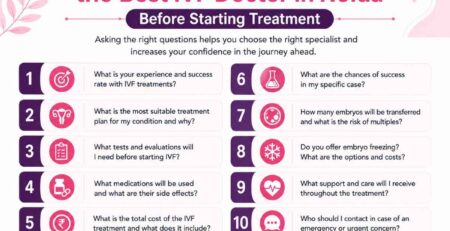
If you’re comparing options and trying to find the Best Infertility Specialist in Noida, here’s what actually matters — not flashy ads, but real substance:
- Years of hands-on experience specifically with PCOS cases
- Transparent success rate data, not vague promises
- A proper lab and embryology setup, not outsourced testing
- A doctor who explains things in plain language, not just medical jargon
- Genuine follow-up care, not a one-time consultation and goodbye
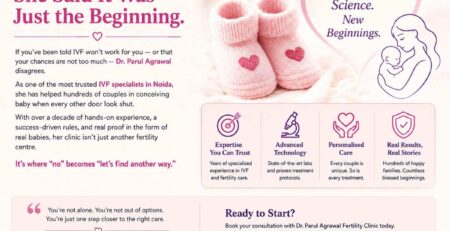
Dr. Parul Agrawal Fertility checks these boxes for a lot of patients who’ve been through the confusing, exhausting Google-search phase and just wanted someone to finally explain things clearly.
Quick FAQ Before You Go
Can PCOS be cured completely? Not exactly “cured,” but it’s very manageable. Most women live symptom-light lives with the right treatment plan.
Does PCOS always mean IVF? No. Many women conceive with lifestyle changes or ovulation induction alone. IVF is usually a later step, not the first one.
How long should we try before seeing a specialist? One year if you’re under 35. Six months if you’re 35 or older. Don’t wait longer than that.
Is male infertility testing really necessary? Yes, always. It’s quick, painless, and saves months of guessing.
Conclusion
PCOS and infertility feel overwhelming when you’re facing it alone with just a search bar for company. But here’s the truth — thousands of women with PCOS become mothers every year, and most of them stopped Googling way before you’re reading this line.
So close the tabs. Stop comparing your cycle to strangers online. A real conversation with the Best IVF Treatment Doctor in Noida answers more in thirty minutes than three months of scrolling ever will.




Leave a Reply