

The Secret “Fertility Protocol” That Doubles IVF Success Rates Fast: What Really Makes the Difference?
There is no single “secret fertility protocol” that can honestly guarantee or automatically double your IVF success rates for couples. What can improve the chances of a successful outcome is a proper customized treatment plan based on your age, ovarian reserve, sperm health, embryo development, uterine health, and previous fertility history. The right ivf treatment doctor in noida choose customized treatment instead of using the same IVF approach for each and every couple.
When you have been trying to conceive for months or even years, but you didn’t go the results in your favour.
One article says IUI is enough. At the same time Another says IVF is the fastest and the best option. Then you come all over phrases like “advanced fertility protocol” or “the secret method that doubles IVF success rates.”
Honestly, it is understandable why these claims get attention most. Fertility treatment can feel uncertain, emotional, expensive, and deeply personal. Naturally, every couple wants to know if there is something they can do to improve their chances or the same treatment which every second clinic provides to them.
Here’s the thing: there is no magic injection, supplement, diet, or single IVF protocol that guarantees pregnancy or doubles the success rates for every couple based on their medical tests.
The closest thing to a genuinely effective “fertility protocol” is a carefully customized medical plan. That means understanding why pregnancy has not happened and then selecting the right treatment, medication, timing, laboratory techniques, and monitoring approach that make sense for that particular patient based on their medical test reports.
At Dr. Parul Agrawal Fertility in Sector 92, Noida, fertility care can bring consultation, diagnostics, surgical evaluation where required, and IVF-related treatment together in one coordinated setting. Dr. Parul Agrawal has more than 23 years of clinical experience in obstetrics, gynaecology, and reproductive medicine, with extensive experience over thousands of IVF cycles, IUI treatments, and laparoscopic and hysteroscopic procedures.
So, instead of asking, “Which secret protocol works for everyone?” the better question is:
What does my body, diagnosis, and fertility history actually require?
What does a Customized fertility protocol actually mean?
A customized fertility protocol is an individual treatment plan which can be designed around a patient’s fertility diagnosis and medical history. It may include diagnostic testing, ovarian stimulation, egg retrieval, IVF or ICSI, embryo development, and transfer planning based on the specific factors affecting the conception.
The word protocol can make fertility treatment sound extremely technical. In reality, it simply means the properly structured medical plan your doctor follows and adjusts your treatment according to that customized plan.
No two fertility journeys are exactly the same.
A woman in her early thirties with PCOS and irregular ovulation may need a very different approach from someone in her late thirties with reduced ovarian reserve. Similarly, a couple facing severe male-factor infertility may need a different fertilisation technique than a couple dealing with an unexplained infertility.
That is why an experienced ivf treatment doctor in noida patients consult should begin with a complete fertility assessment rather than immediately recommending the same treatment for everyone.
The evaluation may include AMH testing and an antral follicle count to understand ovarian reserve, ultrasound assessment of the uterus and ovaries, and semen analysis to assess sperm-related factors. Depending on the medical history, doctors may also recommend tests such as HSG to assess the fallopian tubes if they are broken or not or procedures such as hysteroscopy when there is a reason to investigate the uterine cavity more closely.
The goal is not to perform every possible test. The goal is to identify the factors that could actually make better the treatment plan.
That difference matters.
What actually happens during a Customized IVF cycle?
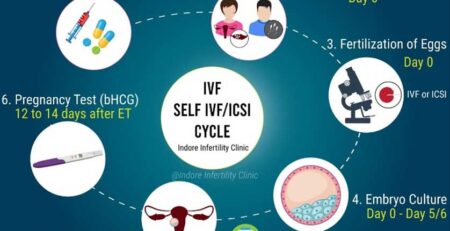
A typical IVF cycle usually includes ovarian stimulation for approximately 10–14 days, regular monitoring, egg retrieval, fertilisation in the IVF laboratory, embryo development, and embryo transfer or freezing depending on the patient’s medical condition and treatment plan.
An IVF cycle begins with the proper and right planning.
Before medications are started, the fertility specialist should reviews the patient’s age, ovarian reserve, menstrual history, previous pregnancies, previous fertility treatments, sperm results, and any known medical or reproductive conditions.
Once the team understands the clinical situation properly, the doctor selects an ovarian stimulation approach.
Different IVF protocols may use medications that encourage multiple follicles to develop. Depending on the patient’s individual needs, doctors may use approaches involving GnRH antagonist protocols, GnRH agonist protocols, or other stimulation strategies. The exact choice depends on factors such as ovarian reserve, age, expected response, previous IVF history, and the risk of an excessive response.
The stimulation phase often lasts around 10 to 14 days.
During this time, the patient undergoes the ultrasound monitoring and, when appropriate, hormonal assessment. The fertility specialist watches how the follicles are developing and may adjust medication doses depending on the response.
This is one of the reasons that customized treatment matters.
A medication dose that works well for one patient may not produce the same response in another.
Once the follicles reach an appropriate stage, the doctor schedules the trigger injection and egg retrieval. After retrieval, the embryology team assesses the eggs and prepares for the fertilisation process.
Some couples undergo conventional IVF, where eggs and sperm are placed together in a controlled laboratory environment. In cases involving a major male-factor infertility or specific fertilisation concerns, the doctor may recommend ICSI, where an embryologist injects a single sperm directly into a mature egg. The resulting embryos are then monitored as they develop.
Depending on the patient’s condition and treatment plan, the specialist may recommend a fresh embryo transfer or freezing embryos for a later transfer. And then comes the very emotional part. The approximately two-weeks of wait. For many patients, those days feel much longer than two weeks.
Is IUI or IVF the right treatment for your fertility problem?
IUI and IVF are different treatments designed for different fertility situations. IUI may be suitable for selected couples with certain fertility concerns, while IVF provides greater laboratory control and may be recommended for conditions such as blocked tubes, major male-factor infertility, or unsuccessful previous treatment.
Many couples ask whether they should try IUI first or move directly to IVF.
The answer depends on the test reports, on their medical conditions.
IUI is generally less invasive because fertilisation still happens inside the body. During an IUI cycle, prepared sperm is placed into the uterus around the time of ovulation.
IVF, on the other hand, involves retrieving eggs and fertilising them in the laboratory before embryo transfer.
Here is a simple comparison:
| Factor | IUI | IVF |
| Where fertilisation happens | Inside the body | In the IVF laboratory |
| Treatment intensity | Less intensive | More intensive |
| Laboratory involvement | Limited | Extensive embryo monitoring |
| Suitable for | Selected fertility conditions | A wider range of infertility conditions |
| Embryo development assessment | Not possible outside the body | Embryo development can be monitored |
For suitable patients, doctors may sometimes try around three to four IUI cycles before considering an IVF treatment to any couple.
However, that is not a strict rule for everyone.
A woman with blocked fallopian tubes, for example, may not benefit from repeatedly trying IUI. Similarly, some couples may need to consider IVF earlier because of age-related fertility concerns or major sperm-related issues.
This is where consultation with an fertility Specialist in Noida becomes very important. The treatment decision should depend on medical evidence and the couple’s individual circumstances, not simply on a standard treatment sequence.
Why can IVF fail even when everything seems to look normal?
IVF can be affected by many biological factors, including ovarian response, egg quality, sperm health, embryo development, chromosome-related factors, and uterine conditions. One unsuccessful IVF cycle does not automatically mean future treatment will fail.
This is one of the most difficult parts of fertility treatment. A couple may do everything recommended by doctor. The medications may be taken correctly. Egg retrieval may go smoothly. Fertilisation may occur. And still, pregnancy may not happen.
Honestly, IVF is medically advanced, but it cannot remove every biological uncertainty from your body completely.
One possible reason is ovarian response. Some patients produce fewer eggs than expected, while others may respond more strongly than anticipated. The information gathered during one cycle can sometimes help the doctor adjust the approach in a future cycle.
Another important factor is the embryo development.
Not every retrieved egg is mature. Not every mature egg fertilises. And not every fertilised egg develops into an embryo with the same potential for implantation and pregnancy.
Age can play an important role here because egg quantity and quality generally change over the period of time, particularly as women move over their mid-thirties.
Sperm factors can also influence fertility outcomes.
This is why fertility treatment should involve evaluation of both partners. A semen analysis can provide important information about sperm concentration, movement, and morphology, although a fertility specialist may consider the complete clinical picture rather than depending only on one number alone.
The uterus is another important part of the equation.
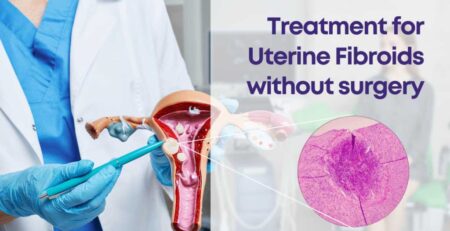
In selected patients, doctors may investigate whether conditions such as polyps, fibroids affecting the uterine cavity, adhesions, or other abnormalities could influence implantation. Procedures such as hysteroscopy may be useful when the patient’s symptoms, history, or previous treatment findings provide a reason for further evaluation.
The key is personalised investigation.
A good ivf treatment doctor in noida should not automatically order every test after every unsuccessful cycle. Instead, the doctor should review what happened and decide whether an additional investigation could provide any useful information or not.
What are the biggest misconceptions about “doubling” IVF success rates?
No single medication, supplement, IVF protocol, or treatment add-on can responsibly promise to double success rates for every patient. IVF outcomes depend on many individual biological and medical factors. The first misconception is that a stronger protocol always produces the better results. That is not necessarily true.
Higher medication doses do not automatically mean better egg quality or better IVF outcomes. The goal is to achieve an appropriate ovarian response for that particular patient.
Another common belief is that more eggs always guarantee the more success.
Egg numbers are important, but they are only one part of a much larger picture. Egg maturity, fertilisation, embryo development, age, sperm factors, and uterine health can all influence the treatment journey of an IVF Treatments.
Some patients also assume that one unsuccessful IVF cycle means something went seriously wrong.
Not always.
Human reproduction is complex, even with modern fertility treatment. Sometimes a failed cycle provides important information that helps doctors reassess the treatment plan again.
This is why patients should look for a best infertility specialist in noida who reviews previous treatment thoughtfully instead of simply repeating the same protocol without discussing what was learned, and what will work into your case.
Another important misconception involves fertility add-ons.
The internet often promotes additional treatments, supplements, or techniques as important for every IVF patient. Some approaches may have a role in selected clinical situations, but patients should always ask why a particular treatment is being recommended and whether it is appropriate for their specific diagnosis or not.
That simple question can be incredibly valuable:
“Why do I need this?”
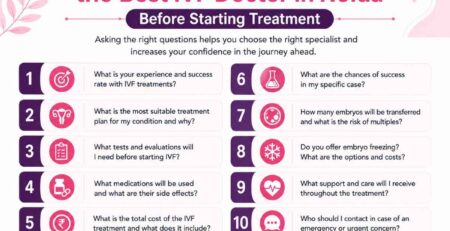
What should you ask before choosing a fertility specialist?
Before starting fertility treatment, patients should understand their diagnosis, recommended treatment, medication plan, testing requirements, and realistic next steps. A good specialist should explain these points clearly and encourage questions.
Choosing a fertility clinic can feel like a major decision because it is not simply about selecting a medical service. You are trusting someone for an extremely personal part of your life.
During your consultation, ask the specialist what they believe is causing the fertility problem and what evidence supports that assessment. If more tests are recommended, ask why those tests are needed and how the results could influence the treatment.
You should also understand why the doctor recommends IUI, IVF, or ICSI in your particular situation.
If IVF is recommended, it is reasonable to ask what type of stimulation approach is being considered and how the treatment may be adjusted if your ovaries respond differently than expected.
Couples should also ask how male fertility factors are being evaluated and whether previous treatment records will be reviewed or not if they have undergone unsuccessful treatment elsewhere.
Another important question is what happens after a cycle does not go as planned.
Will the doctor review the ovarian response, fertilisation, embryo development, and other relevant factors before recommending the next step?
A trustworthy ivf treatment doctor in noida should not make you feel uncomfortable for asking these questions to doctor. You are not being difficult.
You are participating in your own healthcare.
At Dr. Parul Agrawal Fertility in Sector 92, Noida, patients can discuss fertility concerns within a facility where consultation, diagnostic evaluation, reproductive procedures, and IVF-related treatment can be coordinated under one roof.
Does experience make a difference when choosing a fertility specialist?
Clinical experience can be valuable because fertility treatment often involves complex decisions that depend on diagnosis, age, treatment history, and how a patient responds over the time. Patients should also look for evidence-based recommendations and clear communication.
Fertility treatment is rarely about following one fixed formula.
A patient may have PCOS, reduced ovarian reserve, endometriosis, male-factor infertility, or unexplained infertility. Some patients may also have a history of failed IUI or IVF cycles.
Each situation requires careful interpretation.
Dr. Parul Agrawal has more than 23 years of clinical experience over obstetrics, gynaecology, and reproductive medicine. Her clinical work includes extensive experience with thousands of IVF cycles, thousands of IUI treatments, and thousands of laparoscopic and hysteroscopic surgeries.
That broader experience can matter when fertility concerns involve more than one factor.
For example, a patient may require both fertility treatment planning and evaluation of a uterine condition. Another couple may need detailed male-factor assessment alongside IVF or ICSI planning.
An experienced Fertility Specialist in Noida should look at the complete fertility picture rather than treating one test result in isolation.
So, is there really a “secret fertility protocol” that doubles IVF success?
No responsible fertility specialist can guarantee that one protocol will double IVF success for every patient. The most meaningful approach is accurate diagnosis, individualised treatment planning, careful monitoring, appropriate laboratory procedures, and thoughtful review of each patient’s response. The truth is less dramatic than a viral headline. But it is much more useful. There is no universal fertility shortcut.
There is no single injection that works for everyone. No supplement can erase every cause of infertility. No doctor can responsibly guarantee pregnancy.
What can make a real difference is understanding the problem properly. For some patients, IUI may be the appropriate first step. For others, IVF may provide a more clear treatment pathway. Some couples may require ICSI because of sperm-related concerns, while others may need further assessment of the uterus before embryo transfer.
That is why choosing the best infertility specialist in noida should involve looking beyond attractive promises and focusing on experience, communication, diagnostic capability, and the customized treatment planning.
At Dr. Parul Agrawal Fertility in Sector 92, Noida, the approach to fertility care can bring consultation, diagnostics, reproductive procedures, and IVF treatment together in one coordinated facility. With more than 23 years of clinical experience, Dr. Parul Agrawal has worked with patients over a huge range of fertility concerns and treatment journeys.
The bottom line is simple.
The best fertility protocol is not a secret formula. It is a treatment plan designed around you. Your age. Your diagnosis. Your ovarian reserve. Your partner’s fertility factors. Your previous treatment history. And the medical evidence guiding the next step.
Frequently Asked Questions About IVF and Fertility Treatment
How long does the IVF stimulation phase usually take?
Ovarian stimulation commonly lasts around 10–14 days, although the exact duration can vary depending on how the ovaries respond to medication and the protocol selected by the fertility specialist.
During this period, doctors monitor follicle development through ultrasound and may use additional testing when clinically appropriate. The timing of egg retrieval depends on how the follicles develop rather than following exactly the same number of days for every patient.
How many IUI cycles should I try before moving to IVF?
Around three to four IUI cycles may be tried in selected patients before considering IVF, but the right number depends on age, diagnosis, ovarian reserve, sperm factors, and other medical considerations.
Some patients may benefit from moving to IVF sooner. For example, blocked fallopian tubes or major male-factor infertility may change the recommended treatment pathway. An Infertility Specialist in Noida can help explain whether continuing IUI is medically appropriate in an individual situation.
Does IVF success decrease after age 35?
IVF success generally declines gradually after age 35 because age-related changes can affect egg quantity and quality. However, individual fertility potential varies, and age is only one part of the overall assessment.
AMH levels, ultrasound findings, medical history, and previous treatment response can provide additional information. A consultation with a fertility specialist can help patients understand how these factors may influence treatment decisions.
What tests should I consider before starting IVF?
Common fertility investigations may include AMH testing, ultrasound assessment, semen analysis, and evaluation of the fallopian tubes or uterus when medically indicated.
Not every patient needs every investigation. A responsible best fertility specialist in noida should explain why each test is recommended and how the results could influence the personalised fertility treatment plan.








Leave a Reply