
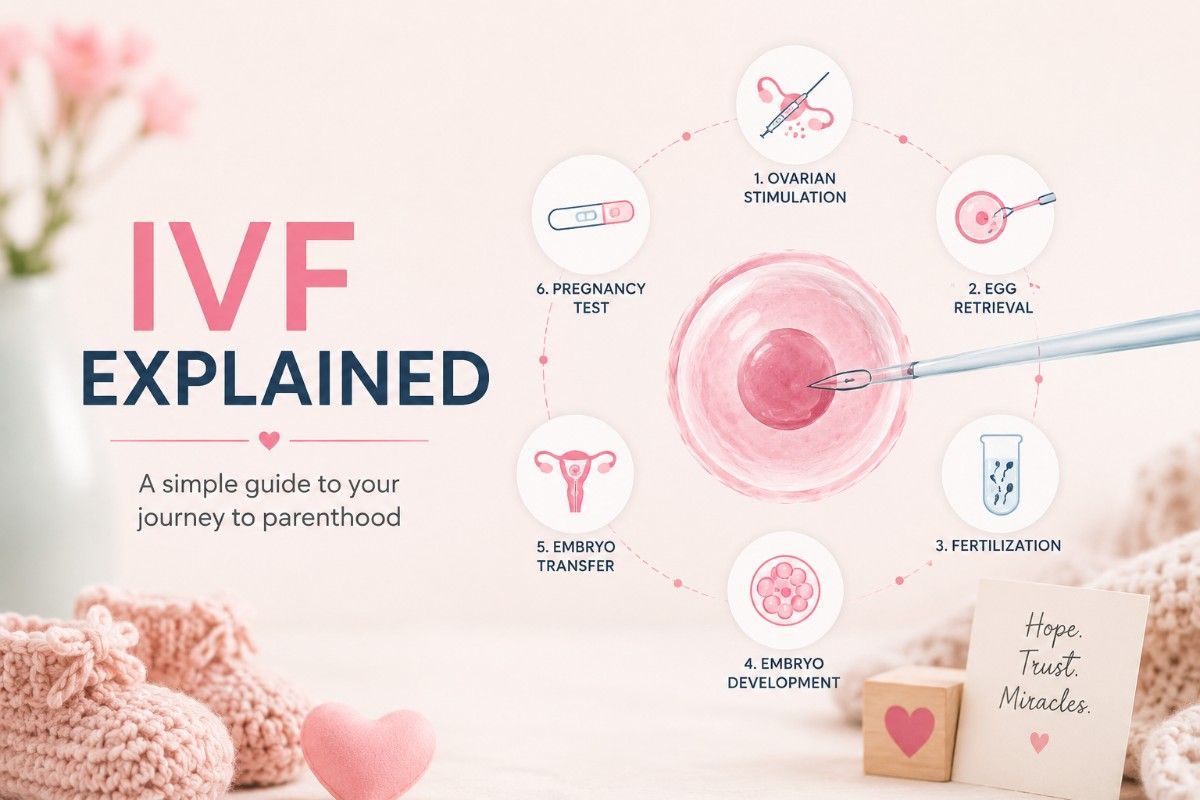
What Nobody Tells You About the IVF Two-Week Wait (and How to Survive It)
The two-week wait is the stretch between your embryo transfer and the blood test that confirms pregnancy — usually 9 to 14 days. It’s less about waiting for a result and more about managing hormones, hope, and headspace, and knowing what’s normal makes the whole thing easier to survive.
Honestly, nobody prepares you for this part. Clinics talk you through the stimulation phase, the egg retrieval, the transfer itself — and then you’re handed a date for your blood test and sent home to sit with your thoughts. If you’ve been searching for the best infertility specialist in Noida because you’re somewhere in the middle of this wait right now, you’re in the right place, and you’re not alone in feeling like this is the hardest part of the whole process.
So let’s talk about what actually happens during these two weeks, why your body behaves the way it does, and what’s genuinely worth worrying about versus what isn’t. Plus, we’ll cover what to ask when you’re choosing a clinic in the first place, because the right support during this exact phase makes an enormous difference to how survivable it feels. Patients researching IVF, IUI, or ICSI before a first consultation often don’t realize the two-week wait is where the most emotional support is actually needed — not just during the procedures themselves.
So What’s Actually Happening Inside Your Body?
After transfer, your embryo is (hopefully) implanting into the uterine lining while progesterone support keeps everything hormonally stable. Bloating, cramping, spotting, and mood swings are common — and most of them are caused by the medication, not the outcome.
Here’s the thing — a fresh or frozen embryo transfer doesn’t come with an instruction manual for what your body will feel like afterward. Also, progesterone injections or pessaries, which you’re almost certainly on during this phase, cause real physical symptoms: breast tenderness, fatigue, low-grade cramping, and even mild nausea. So when patients tell us every twinge feels like a sign, we get it completely.
At a fertility specialist in Noida clinic like ours, patients are usually 10 to 14 days out from their last stimulation dose by the time transfer happens, which means your body is still recalibrating from a full ovarian stimulation cycle on top of adjusting to progesterone support. Plus, if this cycle followed a natural or medicated frozen embryo transfer protocol, your hormone levels are being carefully monitored and adjusted almost daily. That’s a lot happening internally, even though outwardly you’re just… waiting.
Also worth saying plainly: implantation, if it happens, typically occurs 6 to 10 days after a day-5 blastocyst transfer. So testing too early — before your clinic’s scheduled date — often just measures leftover trigger-shot hCG rather than a real pregnancy hormone rise, which is exactly why the best ivf doctor in Noida will ask you to wait for the official blood test instead of a home kit on day 6 or 7.
Plus, it helps to remember that every patient’s timeline looks slightly different depending on whether the protocol used was a natural cycle, a medicated cycle, or a frozen embryo transfer following a prior stimulation. The best infertility specialist in Noida for your situation is one who explains this timeline to you individually, rather than handing you a generic printout and sending you home. That personalized explanation, more than anything else, is what makes the wait feel manageable instead of frightening.
Medication Side Effects vs. Early Pregnancy Symptoms — How Do You Actually Tell the Difference?
Short answer — you mostly can’t, and that’s normal. Progesterone support mimics early pregnancy symptoms so closely that even experienced doctors won’t read into them. The blood test, not your body, is the reliable signal.
| Symptom | Likely Cause | What It Actually Tells You |
| Mild cramping | Progesterone / uterine lining changes | Not diagnostic either way |
| Breast tenderness | Progesterone support | Common with or without pregnancy |
| Spotting | Cervix irritation, progesterone withdrawal, or implantation | Needs a call to your clinic, not panic |
| Fatigue | Hormonal medication, disrupted sleep | Not a reliable early sign |
| No symptoms at all | Perfectly normal | Doesn’t predict a negative result |
So, if you’re symptom-spotting every hour, we understand the urge — but this table is basically why the two-week wait feels so maddening. Honestly, nearly every sign you’d usually associate with early pregnancy is also just a side effect of the same medication supporting a non-pregnant cycle. That’s not us being evasive; it’s just clinical reality.
The Biggest Misconceptions About the Two-Week Wait
The three misconceptions we hear most: symptoms predict outcome, bed rest improves success, and early home testing is reliable. None of them hold up medically, and believing them tends to add unnecessary stress on top of an already difficult wait.
1. “More symptoms means it worked.” We covered this above, but it bears repeating — symptom severity has no proven correlation with implantation success. Also, some patients with zero symptoms get a positive result; others with heavy symptoms don’t.
2. “I need to stay in bed for two weeks.” Actually, prolonged bed rest isn’t recommended after embryo transfer at any reputable ivf treatment in Noida clinic. Gentle, normal activity — walking, light work, regular routines — doesn’t reduce implantation chances and generally helps mental health more than lying still does.
3. “A faint line on day 8 means it’s over” (or “it means I’m pregnant”). Home urine tests this early are unreliable in both directions. So, trigger-shot hCG can still be in your system, or hCG levels genuinely may not have risen enough yet to register. This is exactly why every fertility specialist in Noida worth seeing will ask you to hold off and trust the scheduled beta hCG blood test instead.
4. “If this cycle fails, IVF just doesn’t work for me.” One unsuccessful cycle is data, not a verdict. Across more than 12,000 IVF cycles performed at our Sector 92 facility, we’ve seen that adjusting the protocol, dosage, or timing based on what happened this cycle very often changes the outcome of the next one. So, before assuming your cycle “didn’t work” for you personally, it’s worth a detailed review with the best ivf doctor in Noida you’re working with of exactly what happened at each stage — stimulation response, fertilization rate, embryo grading, and lining thickness at transfer all tell a story worth reading properly.
Also, it’s easy to forget that fertility treatment is rarely a single straight line from consultation to pregnancy. Some patients need one round of IVF treatment in Noida; others need a combination of surgery, IUI, and IVF across several months. Neither path means anything about you personally — it just means your body needed a slightly different approach, and a good clinic will keep adjusting until it finds the right one for you.
What Should You Ask Before Choosing a Fertility Specialist in Noida?
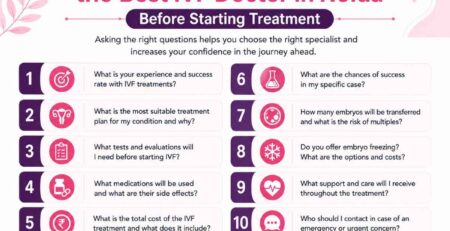
Before starting or continuing treatment, ask about protocol customization, lab standards, transparent success data by age group, and what support exists during the two-week wait itself. The right clinic should answer all four without hesitation.
Choosing where to go for IVF treatment in Noida is a bigger decision than most people realize going in, so here’s a practical checklist for your first (or next) consultation:
- Ask what diagnostics come first. A responsible clinic doesn’t rush straight to IVF. Expect AMH testing, semen analysis, and often an HSG (hysterosalpingogram) before a protocol is even discussed.
- Ask how many IUI cycles they’d try before recommending IVF. Typically, 3 to 4 IUI cycles are attempted before moving on, depending on age and diagnosis — if a clinic jumps straight to IVF without exploring this, ask why.
- Ask about their embryology lab standards. Is the IVF lab on-site, or outsourced? At Dr. Parul Agrawal Fertility, consultation, diagnostics, surgery, and the IVF lab all sit under one Sector 92 roof, which matters for both continuity of care and turnaround time.
- Ask how the two-week wait is supported. Do they check in? Is there a number to call if spotting or cramping worries you? This detail says a lot about how a clinic treats patients, not just cycles.
- Ask about the doctor’s actual experience. Dr. Parul Agrawal brings 23+ years of clinical experience, with 19,000+ IUI treatments and 10,000+ laparoscopic and hysteroscopic surgeries performed, alongside the IVF cycle volume mentioned above — track record matters enormously in a field this personal.
Honestly, going through this checklist before you commit to a clinic saves a lot of heartache later. The best infertility specialist in Noida for you is someone whose answers to every question above feel specific to your case, not recycled from a brochure. And if you’re still comparing options, it’s worth remembering that the best infertility specialist in Noida isn’t necessarily the busiest one — it’s the one who takes the time to walk you through your own two-week wait, step by step, before you even reach it.
Two-Week Wait: Your Common Questions, Answered
Q1. How long is the IVF two-week wait, exactly?
It typically runs 9 to 14 days from transfer to your scheduled beta hCG blood test, depending on whether you had a day-3 or day-5 embryo transfer. Any reliable best ivf doctor in Noida will confirm your exact test date based on your specific protocol rather than a generic calendar count.
Q2. Can I test early at home during the two-week wait?
You can, but results before your clinic’s scheduled date are frequently misleading in both directions because of residual trigger-shot hCG or hormone levels that simply haven’t risen enough yet. Most clinics recommend waiting for the blood test.
Q3. Is spotting during the two-week wait a bad sign?
Not necessarily. Spotting can come from progesterone support, cervix sensitivity after transfer, or implantation itself. It’s worth calling your clinic to be safe, but it isn’t automatically a negative signal.
Q4. What lifestyle changes actually help during this wait?
Gentle movement, adequate sleep, staying hydrated, and continuing prescribed medication exactly as directed matter far more than bed rest. Emotional support — whether from a partner, counselor, or your clinical team — also genuinely helps people get through these two weeks, and it’s one more reason the best infertility specialist in Noida for your journey is someone who stays reachable during exactly this stretch of the process.
Conclusion
If you’re currently in the middle of your own two-week wait, or you’re still deciding where to start, Dr. Parul Agrawal Fertility in Sector 92, Noida, offers consultation, diagnostics, and treatment under one roof, with more than two decades of experience guiding patients through exactly this stage. The wait is hard — but you don’t have to sit through it without support from the best infertility specialist in Noida your situation deserves.










Leave a Reply