
Why Am I Not Getting Pregnant?’ — A Fertility IVF Doctor In Noida Answers the Question Nobody Wants to Ask
You’ve been trying, For months, Maybe for years. You’ve tracked your cycle, avoided caffeine, slept on time, quit junk food, and still — you got nothing. So you open your phone and type: “Why am I not getting pregnant?”
Honestly, you’re not alone in this world of not being pregnant.
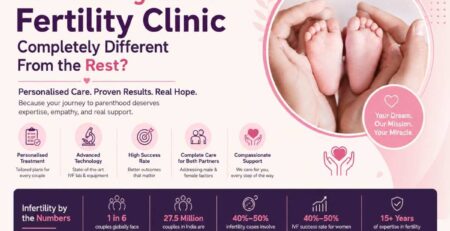
In India only, 1 in 6 couples struggles with infertility. That’s roughly 27.5 million couples dealing with the exact same issues like yours, the same negative tests, the same “just relax” advice from many people or doctors, who mean well but have no idea. And most of them waited for too long before seeing a specialist.
Here’s the straight answer: infertility has real, treatable causes. It’s not about stress. It’s not karma. It’s biology — and biology can be worked with. As a trusted IVF Specialist in Noida, Dr. Parul Agrawal has helped hundreds of couples in understanding exactly what’s blocking their path to becoming parent and fix it.
So, What Does “Infertility” Actually Mean?
Let’s get this out of the way. Infertility means you’ve been having regular, unprotected sex for 12 months and haven’t conceived. If you’re over 35? That window drops to 6 months.
So if you’ve hit that mark — it’s not in your head. It’s not you being impatient. It’s a medical situation that deserves a medical answer.
The Real Reasons You’re Not Getting Pregnant
Here’s where it gets more interesting. As Most people assume infertility is just a “woman’s problem.” It’s not. It’s The data tells a different story.
- 40% of infertility cases are due to female factors
- 40% are due to male factors
- 20% are unexplained or a mix of both
So yeah — this is a couple’s issue. Not only her-issue.
Female Causes You Should Know About
1. PCOS (Polycystic Ovary Syndrome)
This one’s an incredibly common. Around 1 in 5 women in India have PCOS. It messes with your hormones, disrupts ovulation, and makes conception harder. The good news? It’s very treatable with the right plan.
2. Blocked Fallopian Tubes
If the tubes are blocked — usually from past infections or endometriosis — the egg and sperm can’t meet. Simple as that. A test called HSG (Hysterosalpingography) can spot this quickly.
3. Low Ovarian Reserve
This basically means fewer eggs. It happens with age but can also hit younger women. A simple AMH blood test can check your ovarian reserve. Many women discover this only after years of trying.
4. Endometriosis
About 10–15% of women of reproductive age have endometriosis. It’s painful, sneaky, and deeply underdiagnosed. And yes, it affects fertility majorly.
5. Thyroid Issues
Your thyroid affects EVERYTHING — including your ability to conceive. An underactive or overactive thyroid can prevent pregnancy or cause repeated miscarriages. A quick blood test tells the whole story.
Male Causes People Don’t Talk About Enough
Here’s the truth no one says out loud: male infertility is just as common, just as fixable, and way less talked about. If you’re looking for best male infertility treatment in Noida, this matters.
Low Sperm Count (Oligospermia) If there aren’t enough sperm, the odds of fertilisation drop dramatically.
Poor Sperm Motility Sperm can be plentiful but lazy — not swimming well enough to reach the egg.
Abnormal Sperm Morphology Shape matters too. Oddly shaped sperm have a harder time penetrating the egg.
Hormonal Imbalances in Men Low testosterone, high prolactin, thyroid issues — these affect sperm production directly.
A semen analysis is the starting point for evaluating male fertility. It’s painless, quick, and gives enormous information.
“But We Tried for 6 Months — Is That Too Early to See a Doctor?”
Honestly? No. Especially if:
- You’re over 35
- Your periods are irregular or extremely painful
- You’ve had pelvic infections or STIs in the past
- He’s had any testicular injuries, surgeries, or infections
- You’ve had previous miscarriages
Any one of these? Don’t wait. See a fertility treatment doctor in Noida sooner rather than later. Time is genuinely a factor here, especially with egg quality and age.
What Happens When You First Visit a Fertility Specialist?
A lot of people avoid going because they’re scared of what they’ll find out. Totally understand that. But here’s what actually happens at a good fertility clinic — no drama, no judgment.
Step 1 — Full History The doctor asks about your cycles, lifestyle, past pregnancies, and any symptoms. Both partners should ideally be there.
Step 2 — Blood Tests Hormones like FSH, LH, AMH, prolactin, thyroid, and testosterone get checked. These paint a clear picture of what’s going on.
Step 3 — Ultrasound A transvaginal ultrasound checks the uterus, ovaries, and antral follicle count. Takes about 10 minutes.
Step 4 — Semen Analysis This checks sperm count, motility, and morphology. It’s the most important male fertility test there is.
Step 5 — Additional Tests If Needed HSG for tube blockage, laparoscopy if endometriosis is suspected, or genetic testing in some cases.
The whole workup usually wraps up within a week or two. Then you get actual answers — not guesswork.
💬 Feeling overwhelmed trying to figure this out on your own? Dr. Parul Agrawal’s team offers a warm, judgment-free first consultation. Just come in, ask your questions, get clarity. [Book Your Consultation →]
What Are the Treatment Options?
Here’s where it gets hopeful. Really hopeful.
Ovulation Induction
For women who aren’t ovulating regularly (hello, PCOS), simple oral medications like Clomiphene or injections can trigger egg release. Many couples conceive this way without needing anything more complex.
IUI (Intrauterine Insemination)
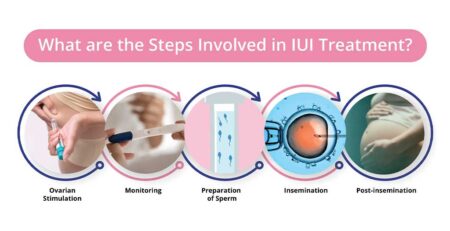
Sperm gets washed, concentrated, and placed directly inside the uterus around ovulation. It’s minimally invasive and often the first step when male factors are mild or timing is the issue.
IVF (In Vitro Fertilisation)
This is the big one. And it’s also the most misunderstood.
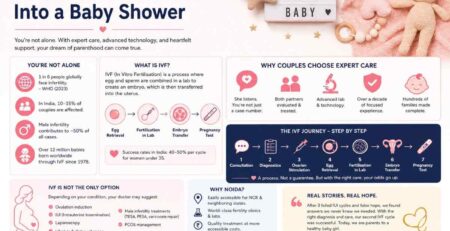
IVF involves stimulating the ovaries to produce multiple eggs, retrieving them, fertilising them with sperm in a lab, and transferring the resulting embryo into the uterus.
Global IVF success rates hover around 40–50% per cycle for women under 35. With good ovarian reserve and a skilled IVF Specialist doctor in Noida, those numbers are very achievable.
Also — over 10 million babies worldwide have been born through IVF since 1978. Ten. Million. It works.
ICSI (Intracytoplasmic Sperm Injection)
This is IVF’s superhero sidekick. A single healthy sperm gets injected directly into the egg. Game-changer for severe male infertility cases.
Donor Eggs or Sperm
When the ovarian reserve is very low, or sperm quality is severely compromised, donor options make parenthood possible. More couples use this route than you’d think — and it leads to real, healthy babies.
Real Numbers That Give Real Hope
Let’s talk data for a second. Because facts help when you’re feeling lost.
- 85–90% of infertility cases are treated with conventional medical therapies (not IVF). Most people don’t need the most aggressive option.
- IVF success rates in India have improved dramatically — top clinics report 45–55% success rates for women under 35.
- Male infertility treatment (like IUI with ICSI) has helped couples conceive even when sperm counts were extremely low.
- Early intervention (within the first year of trying) significantly improves outcomes — up to 20–30% better success rates compared to waiting longer.
- Couples who sought help within 12 months of trying had 3x better outcomes than those who waited 3+ years.
So — the sooner you go, the better your chances. That’s not a sales pitch. That’s just the data.
Why Noida Couples Are Choosing Dr. Parul Agrawal Fertility
Look, there are a lot of options when you search for an IVF doctor in Noida. So what makes the difference?
Experience. Real clinical experience with real couples.
Dr. Parul Agrawal brings years of specialised fertility practice to every consultation. The approach here isn’t one-size-fits-all. Each couple gets a customized plan based on their specific diagnosis, age, test results, and emotional readiness.
Also — the environment matters. Fertility treatment is emotionally loaded. The last thing you need is a clinical, cold, hurried experience. The clinic runs on the belief that fertility care should feel human. Honest. Supportive.
Check this out: many couples who come in after years of failed attempts elsewhere finally get to the root cause here — because the diagnostic workup is thorough, not rushed.
The Emotional Side Nobody Talks About
Infertility is hard. Really hard. It wears down relationships, self-esteem, and hope. And yet most couples still suffer in silence because it “feels embarrassing.”
It shouldn’t.
Wanting to be a parent is one of the most human things there is. And struggling to get there doesn’t make you broken. It makes you someone who needs the right support and the right doctor.
First, find your information. Then, find your doctor. After that, take one step at a time.
💬 You don’t have to keep Googling alone. Dr. Parul Agrawal and her team understand what you’re going through — medically and emotionally. Take 30 minutes. Ask everything. [Schedule a Free First Consultation →]
FAQ: Things People Actually Want to Know
Q: How long does IVF take from start to finish? One full IVF cycle takes about 4–6 weeks. Egg retrieval, fertilisation, and embryo transfer — it’s all within that window.
Q: Is IVF painful? The injections can be uncomfortable. The retrieval is done under sedation. Most women say it’s manageable — not as scary as it sounds.
Q: What if IVF doesn’t work the first time? Many couples conceive on their second or third cycle. Success also depends on what’s learned from the first attempt. A good clinic adjusts the protocol based on how your body responded.
Q: Can lifestyle changes really help fertility? Yes — but they’re not a substitute for medical evaluation. Quitting smoking, cutting alcohol, managing weight, and reducing stress all matter. Pair those with proper diagnosis and you’re in a much stronger position.
Q: Is male infertility curable? In most cases — absolutely yes. Hormonal treatments, lifestyle changes, surgical interventions (like varicocele repair), and assisted techniques like ICSI have helped thousands of men become fathers.
Conclusion
If you’re asking “why am I not getting pregnant?” — that question deserves a real, medical answer. The best infertility specialist in Noida won’t just run a test or two and send you home. They’ll dig in, find the actual cause, and build a plan around it.
So here’s what you do next. Stop Googling symptoms at 2 AM. Book an appointment. Get the workup done. Get real answers.
Parenthood is possible. The path there just sometimes needs a guide.
Dr. Parul Agrawal Fertility | IVF Specialist in Noida Helping Noida families grow — one hopeful couple at a time.
📞 [Call Now to Book Your Consultation] 🌐 [Visit Our Website] 📍 [Find Us in Noida]






Leave a Reply