
How PCOS Affects Your Fertility — And How IVF Treatment in Noida Can Help You In Conceive
PCOS disturb ovulation by throwing your hormones off balance, which is why getting pregnant can take longer or feel impossible in some months. The good news? Most women with PCOS do conceive, often with a step-up approach — lifestyle changes, then ovulation induction or IUI, and IVF treatment in Noida when needed. It’s rarely about “if,” just “how.”
If you’ve just been told you have PCOS and you’re trying to conceive, take a breath. Honestly, this is one of the most common problem and most treatable causes of fertility struggles we see at Dr. Parul Agrawal Fertility clinic. You are not broken, and you’re definitely not alone. Roughly 1 in 5 women in India live with PCOS problem, and a huge number of them go on to have healthy pregnancies, sometimes naturally, sometimes with a little medical help, but being a mother with PCOS problem is not impossible. .
So let’s talk about what’s actually happening in your body, why it affects your chances of conceiving, and what your real options look like — from simple lifestyle tweaks all the way to IVF, if that’s the road you end up needing.
What is PCOS, really — and why does it mess with fertility?
PCOS (Polycystic Ovary Syndrome) is a hormonal condition where your ovaries produce too much of androgens and insulin resistance is common, which prevents eggs from maturing and releasing normally. No regular ovulation means no regular chance of pregnancy each month.
Here’s the thing — despite the name, PCOS isn’t really about “cysts” in the way people imagine. Your ovaries develop lots of small, immature follicles, but because your hormone signals are out of sync, none of them fully mature and release an egg the way they should in a typical cycle. That’s ovulation, or rather, the lack of it — and it’s the core reason PCOS and fertility struggles go hand in hand.
A few things typically go wrong together:
- Insulin resistance — your body needs more insulin to manage blood sugar, and high insulin pushes your ovaries to make more androgens (male hormones like testosterone).
- Elevated androgens — these interfere with the signals your brain sends to your ovaries, so follicles stall instead of releasing an egg.
- Irregular or absent periods — often the first sign something’s off, since no ovulation usually means no predictable period.
- Weight fluctuations — not always, but for many women, this makes the hormonal imbalance worse, which in turn makes ovulation even more irregular.
Also worth knowing: PCOS doesn’t mean infertility. It means irregular or absent ovulation, which is very different. Once ovulation is restored — through weight management, medication, or assisted reproduction — the actual egg quality in most PCOS patients is perfectly normal, sometimes even better than average, since the ovaries are holding a good reserve of eggs.
PCOS treatment paths: from lifestyle changes to IVF — what actually works?
Most fertility specialists start with the least invasive option and move up only if needed: lifestyle changes and ovulation-inducing medication first, then IUI for a few cycles, and IVF treatment in Noida if those don’t result in pregnancy or if other factors are involved.
Doctors don’t jump straight to IVF for PCOS — that’s a myth we hear often. The typical progression looks something like this:
- Lifestyle and metabolic correction — even a 5–10% reduction in body weight can restart ovulation in many PCOS patients. This isn’t about looking a certain way; it’s about correcting the insulin-androgen cycle.
- Ovulation induction — medications like letrozole (often preferred now over clomiphene) help trigger the release of a mature egg. Doctors track this with follicular monitoring — ultrasounds every few days to watch the follicle grow.
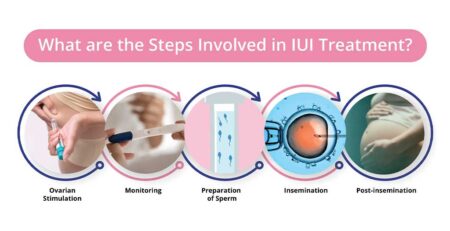
- IUI (Intrauterine Insemination) — if timed ovulation with intercourse hasn’t worked, IUI places prepared sperm directly into the uterus around the time of ovulation. Plus, it’s simpler and more affordable than IVF, so it’s usually tried for 3–4 cycles first.
- IVF — when IUI cycles haven’t worked, when there’s an additional factor like blocked tubes or male infertility, or when time is a real concern (say, you’re in your mid-to-late 30s), IVF becomes the more efficient path forward.
Anyway, IVF works differently for PCOS patients in one important way — because PCOS ovaries tend to respond very well to stimulation medication, doctors often use an antagonist protocol with careful, lower-dose stimulation. This lowers the risk of Ovarian Hyperstimulation Syndrome (OHSS), which PCOS patients are more prone to. A typical IVF cycle involves 10–14 days of stimulation, egg retrieval, fertilization in the lab (sometimes via ICSI if sperm quality needs support), and either a fresh or — more commonly for PCOS patients — a frozen embryo transfer a few weeks later, once hormone levels have settled.
At Dr. Parul Agrawal Fertility in Sector 92, Noida, this entire pathway — diagnostics, ovulation monitoring, IUI, and the IVF lab itself — sits under one roof, which honestly makes a difference when you’re already stressed and don’t want to run between five different clinics for five different steps. It’s also one reason so many patients specifically search for the best fertility doctor in Noida rather than settling for the nearest clinic — continuity of care matters when you’re mid-treatment.
IUI vs IVF for PCOS: side-by-side comparison
IUI is a good first step for PCOS when ovulation can be induced and there are no other blocking factors, while IVF treatment in Noida becomes the better option when IUI has failed, tubes are blocked, sperm parameters are low, or age is working against you.
| Factor | IUI (Intrauterine Insemination) | IVF (In Vitro Fertilization) |
| Best suited for | Mild-to-moderate PCOS with induced ovulation, no tubal blockage | PCOS with failed IUI cycles, blocked tubes, or male-factor infertility |
| Process | Sperm is placed directly into the uterus around ovulation | Eggs are retrieved, fertilized in a lab, and the embryo is transferred back |
| Monitoring | Ultrasound tracking of 1–2 follicles | Ultrasound + hormone tracking of multiple follicles across 10–14 days |
| Typical cycles before switching | 3–4 cycles | N/A — often the next step after IUI |
| Cost | Lower per cycle | Higher per cycle, but often fewer cycles needed overall |
| OHSS risk in PCOS patients | Low | Moderate, managed with antagonist protocols and frozen transfers |
| Success factors | Depends heavily on ovulation timing and sperm quality | Less dependent on natural ovulation timing since it’s controlled in the lab |
So, if you’re staring at this table wondering which column applies to you — that’s exactly the kind of question a proper consultation with a Fertility Specialist in Noida should answer, because it genuinely depends on your specific hormone panel, tube patency, and your partner’s semen analysis.
Common misconceptions and failure points with PCOS fertility treatment
Most PCOS fertility failures come from misdiagnosed severity, skipping metabolic correction, unmonitored medication cycles, or delaying treatment for years while “trying naturally” without medical guidance.
Let’s clear up a few things that trip people up:
Misconception 1: “PCOS means I can never get pregnant naturally.” Not true. Many women with PCOS conceive without any assistance, especially once ovulation is regulated. PCOS affects timing and frequency of ovulation, not your fundamental ability to conceive.
Misconception 2: “If IUI didn’t work once, IVF is my only option now.” Also not quite right. Doctors usually recommend 3–4 well-timed, well-monitored IUI cycles before concluding it isn’t the right path. One unsuccessful cycle doesn’t rule anything out.
Misconception 3: “Losing weight is optional advice — it doesn’t really affect treatment outcomes.” This one costs people real time. Insulin resistance is often the root driver of PCOS-related infertility, so skipping this step and going straight to medication or IVF sometimes means treating the symptom, not the cause. A best fertility doctor in Noida will usually insist on addressing this alongside — not instead of — medical treatment.
Misconception 4: “IVF guarantees success because it’s the ‘strongest’ treatment.” IVF significantly improves your odds by controlling more variables, but no treatment — IUI, IVF, or otherwise — comes with a guaranteed outcome. Age, egg quality, and how your body responds to stimulation all still matter. This is exactly why realistic, honest conversations with your IVF Specialist in Noida matter so much more than chasing the “best” clinic on paper.
What to ask before choosing a fertility specialist — your checklist
Before committing to treatment, ask about the doctor’s PCOS-specific experience, their protocol for OHSS prevention, whether diagnostics and IVF lab are in-house, and how they personalize treatment instead of following a one-size-fits-all cycle.
Choosing where to start (or restart) treatment is a big decision, so here’s what’s actually worth asking when you’re evaluating the best fertility doctor in Noida for your situation:
- How many PCOS-specific IVF cycles has the doctor personally handled? Experience with PCOS specifically matters, since these ovaries respond differently to stimulation than average.
- What’s their OHSS prevention protocol? A good IVF Specialist in Noida should mention antagonist protocols and frozen embryo transfers as standard practice for PCOS patients, not an afterthought.
- Are diagnostics, ultrasound monitoring, and the IVF lab all in one location? Running between labs and clinics adds stress and delays — and delays matter when you’re already anxious.
- Will they explain why they’re recommending a specific step, rather than pushing straight to the most expensive option?
- What diagnostic tests do they run before deciding a path? Look for AMH (ovarian reserve), a full hormone panel, HSG (to check tube patency), and a semen analysis for your partner — PCOS is rarely the only factor at play.
- Do they offer a clear, honest timeline instead of vague promises?
Dr. Parul Agrawal brings 23+ years of clinical experience to these conversations, having personally overseen Thousands of IVF cycles, IUI treatments, and laparoscopic and hysteroscopic surgeries. As an IVF Specialist in Noida, that kind of volume means PCOS-specific nuances — the OHSS risk, the insulin connection, the right protocol tweaks — aren’t guesswork; they’re pattern-recognition built over two decades.
Frequently Asked Questions
Does PCOS always mean I’ll need IVF to get pregnant?
Many women with PCOS conceive through lifestyle changes and ovulation induction alone, or with a few cycles of IUI. IVF treatment in Noida usually becomes relevant only when those steps don’t lead to pregnancy or when there’s an additional fertility factor involved, like blocked tubes or low sperm count.
How is IVF different for someone with PCOS compared to other patients?
PCOS ovaries tend to respond strongly to stimulation medication, so doctors typically use gentler, carefully monitored protocols and often prefer a frozen embryo transfer over a fresh one. This approach lowers the risk of Ovarian Hyperstimulation Syndrome (OHSS), which PCOS patients are more prone to.
How long should I try naturally or with IUI before moving to IVF?
Generally, 3–4 well-monitored IUI cycles are tried first, alongside ovulation-inducing medication. If pregnancy doesn’t occur after that, or if time is a factor — say, you’re over 35 — your fertility specialist may suggest moving to IVF sooner rather than later, since success rates generally decline gradually with age.
Can losing weight actually improve my chances without any medical treatment?
For many women, yes — even a modest 5–10% reduction in body weight can help restore ovulation by improving insulin sensitivity. That said, it’s not a universal fix, and it’s best done alongside, not instead of, guidance from a fertility doctor, since PCOS presents differently from person to person.
Conclusion
If there’s one thing worth taking away from all this, it’s that a PCOS diagnosis is a starting point, not a dead end. The path might involve a few lifestyle shifts, a handful of monitored cycles, or IVF treatment in Noida — and honestly, which path is right depends entirely on your own hormone levels, your partner’s fertility factors, and how your body responds along the way. That’s exactly the kind of personalized read a proper consultation with a Fertility Specialist in Noida gives you, instead of guessing based on someone else’s story. At Dr. Parul Agrawal Fertility in Sector 92, Noida, the goal has always been the same: give you clear answers, an honest treatment plan, and every diagnostic and lab resource you need under one roof — so you’re not managing this journey alone





Leave a Reply