
Struggling to Conceive Tests That Uncover the Root Cause
For many couples, conceiving is a natural step in their journey together. Yet, when months turn into years without success, the stress and worry can be overwhelming. Infertility is more common than most people realize, and in many cases, the cause can be identified with the right medical tests. The good news is that modern fertility medicine offers a wide range of diagnostic tools that not only pinpoint the root of the problem but also guide personalized treatment. Struggling to conceive.
At Dr. Parul Agrawal Fertility, couples receive compassionate guidance and advanced fertility care. Dr. Parul Agrawal, a highly respected IVF Specialist in Noida, brings over 23 years of expertise in reproductive medicine, helping countless couples find hope through science-driven solutions.
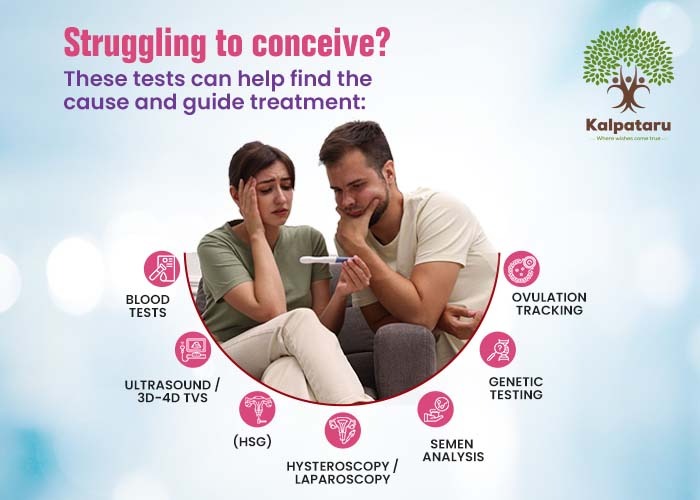
Let’s explore the most common and effective tests that can uncover the reasons behind difficulty conceiving.
1. Blood Tests for Hormonal Balance
Blood tests form the foundation of infertility evaluation. For women, these tests measure hormone levels that influence ovulation and reproductive health. Doctors often check for:
- FSH (Follicle-Stimulating Hormone): Indicates ovarian reserve.
- LH (Luteinizing Hormone): Plays a role in ovulation.
- AMH (Anti-Müllerian Hormone): Reflects egg quantity and quality.
- Thyroid and Prolactin Levels: Imbalances can disrupt menstrual cycles.
For men, hormone testing may include testosterone and other markers related to sperm production. Identifying imbalances early helps in designing effective fertility treatment in Noida.
2. Ultrasound and Advanced 3D-4D TVS
Ultrasound scans, especially 3D and 4D transvaginal sonography (TVS), provide a detailed picture of the uterus and ovaries. These scans can detect:
- Ovarian cysts or polycystic ovary syndrome (PCOS).
- Uterine fibroids, polyps, or abnormalities in the uterine lining.
- Follicular development, which is crucial for tracking ovulation.
By revealing structural issues, ultrasound helps doctors decide whether surgical intervention or assisted reproductive techniques, such as IVF, may be needed.
3. Hysterosalpingography (HSG)
HSG is an X-ray procedure that checks whether the fallopian tubes are open and if the uterine cavity is normal. A contrast dye is introduced into the uterus and fallopian tubes, and X-ray images show any blockages or structural problems.
This test is especially important for women who have been trying to conceive for over a year, as blocked fallopian tubes are a common reason for infertility. Struggling to conceive.
4. Hysteroscopy
Hysteroscopy allows direct visualization of the uterine cavity using a thin camera. It can detect and sometimes treat problems like:
- Uterine septum.
- Adhesions (scar tissue).
- Fibroids or polyps inside the uterus.
This test not only diagnoses but also treats certain conditions during the same procedure, saving time and improving chances of conception.
5. Laparoscopy
Laparoscopy is a minimally invasive surgical procedure performed under anesthesia. It provides a clear view of the pelvic organs, including the uterus, fallopian tubes, and ovaries.
It helps diagnose conditions such as:
- Endometriosis.
- Pelvic adhesions.
- Blocked or damaged fallopian tubes.
When other tests are inconclusive, laparoscopy offers definitive answers and can even correct some problems during the same surgery.
6. Semen Analysis
Infertility is not just a female concern. Nearly half of all infertility cases involve male factors. A semen analysis evaluates:
- Sperm count.
- Motility (movement).
- Morphology (shape).
- Semen volume and quality.
At Dr. Parul Agrawal Fertility, comprehensive Male Infertility Treatment in Noida is offered, ensuring both partners are evaluated thoroughly.
7. Genetic Testing
In some cases, infertility may be linked to genetic factors. Chromosomal abnormalities or genetic conditions can affect egg quality, sperm health, or embryo development. Genetic testing may be recommended for couples experiencing recurrent pregnancy loss or repeated IVF failures.
This information is vital in guiding treatment choices such as IVF with genetic screening or egg and sperm donation.
8. Ovulation Tracing
Ovulation is a critical step in conception. Ovulation tracing can be done through:
- Home ovulation kits.
- Blood hormone tests.
- Ultrasound follicle tracking.
These methods confirm whether and when ovulation is occurring, ensuring treatment is timed correctly for the best chances of pregnancy.
Guiding Treatment After Diagnosis
Once these tests identify the underlying issue, couples can move toward the right fertility treatment. Options may include:
- Lifestyle and medication changes.
- Ovulation induction therapy.
- Intrauterine insemination (IUI).
- In vitro fertilization (IVF).
As the best IVF doctor in Noida, Dr. Parul Agrawal provides advanced, personalized care, making use of the latest reproductive technologies. Her clinic is regarded as one of the best IVF centres in Noida, offering hope to couples who have struggled with infertility for years. Struggling to conceive.
About Dr. Parul Agrawal
Dr. Parul Agrawal, Director of Reproductive Medicine & IVF at Cloudnine Hospital, Noida, has more than 23 years of experience in obstetrics, gynecology, and reproductive medicine. Her expertise includes egg donation, IVF, and advanced infertility treatments. She is widely respected as a leading fertility specialist doctor in Noida, known for her compassionate care and scientific approach.
For consultations, call +91-9990006960 or email parulagrawal.noida@gmail.com.
FAQs
1. When should couples consider fertility testing?
If you have been trying to conceive for over a year (or six months if the woman is over 35), it’s time to consult a fertility specialist in Noida.
2. Can infertility be treated successfully?
Yes, with accurate testing and the right treatment plan, many couples achieve pregnancy through therapies such as IUI, IVF, or surgical correction.
3. Is IVF the only solution for infertility?
Not always. Treatments depend on the diagnosis. Sometimes lifestyle changes, medications, or simpler procedures like IUI are effective.
4. Do men also need infertility testing?
Absolutely. Male factors contribute to almost half of infertility cases, making semen analysis a crucial step.
5. How does age affect fertility?
Female fertility declines significantly after 35, and male fertility can also decrease with age. Early testing helps address issues before they become harder to manage.
6. What makes Dr. Parul Agrawal one of the best IVF specialists in Noida?
Her decades of experience, advanced training in reproductive medicine, and personalized approach make her a trusted IVF doctor in Noida. Struggling to conceive.








Leave a Reply